
The iPhone 17 Pro is easier to open and service, but its logic board is harder to repair. That is the picture from the teardowns published by iFixit and by REWA: more screws and less adhesive for the screen and battery, a smaller and denser logic board for microsoldering. iFixit gives it a provisional repairability score of 7 out of 10. Here is what it changes for a repair technician.
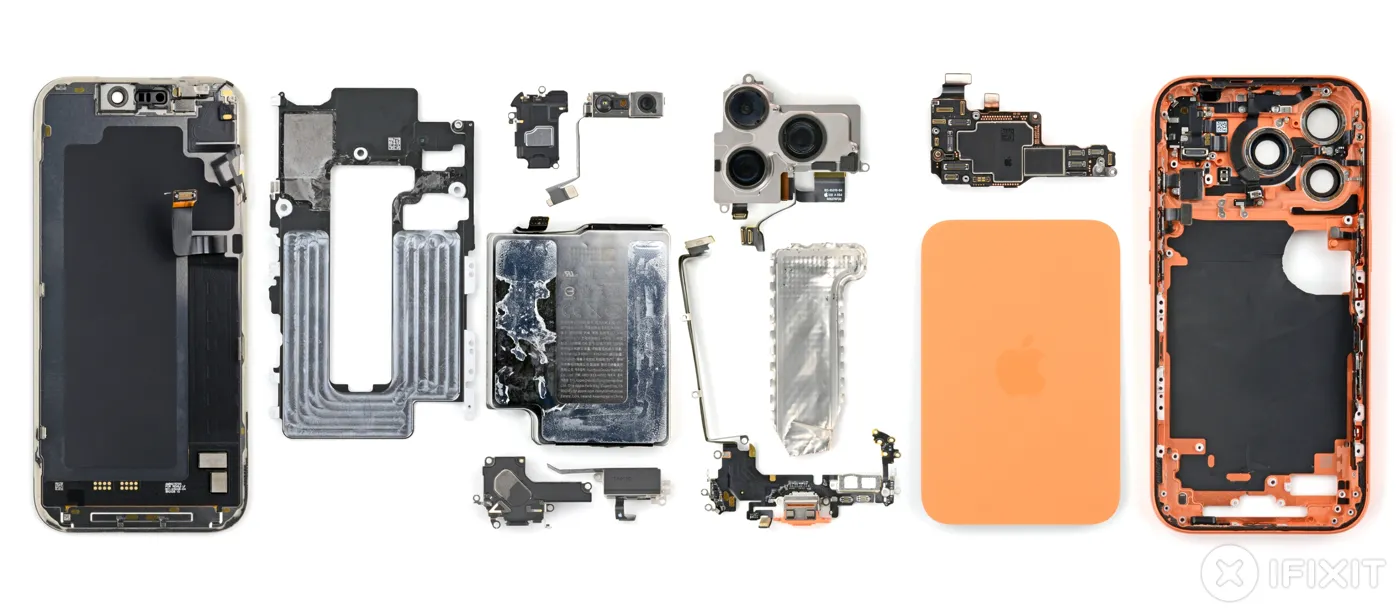
What gets easier: screen and battery
According to the iPhone 17 Pro teardown published by REWA (September 2025, updated October 2025), Apple replaced part of the adhesive with screws:
- Screen. The shield plate behind the display is screwed on, not glued, which makes removal and refitting easier. The display is still 6.3 inches.
- Battery. Measured capacity: 3,988 mAh, 406 mAh more than the iPhone 16 Pro. It is attached to a shield plate, an unusual design to know about before you remove it.
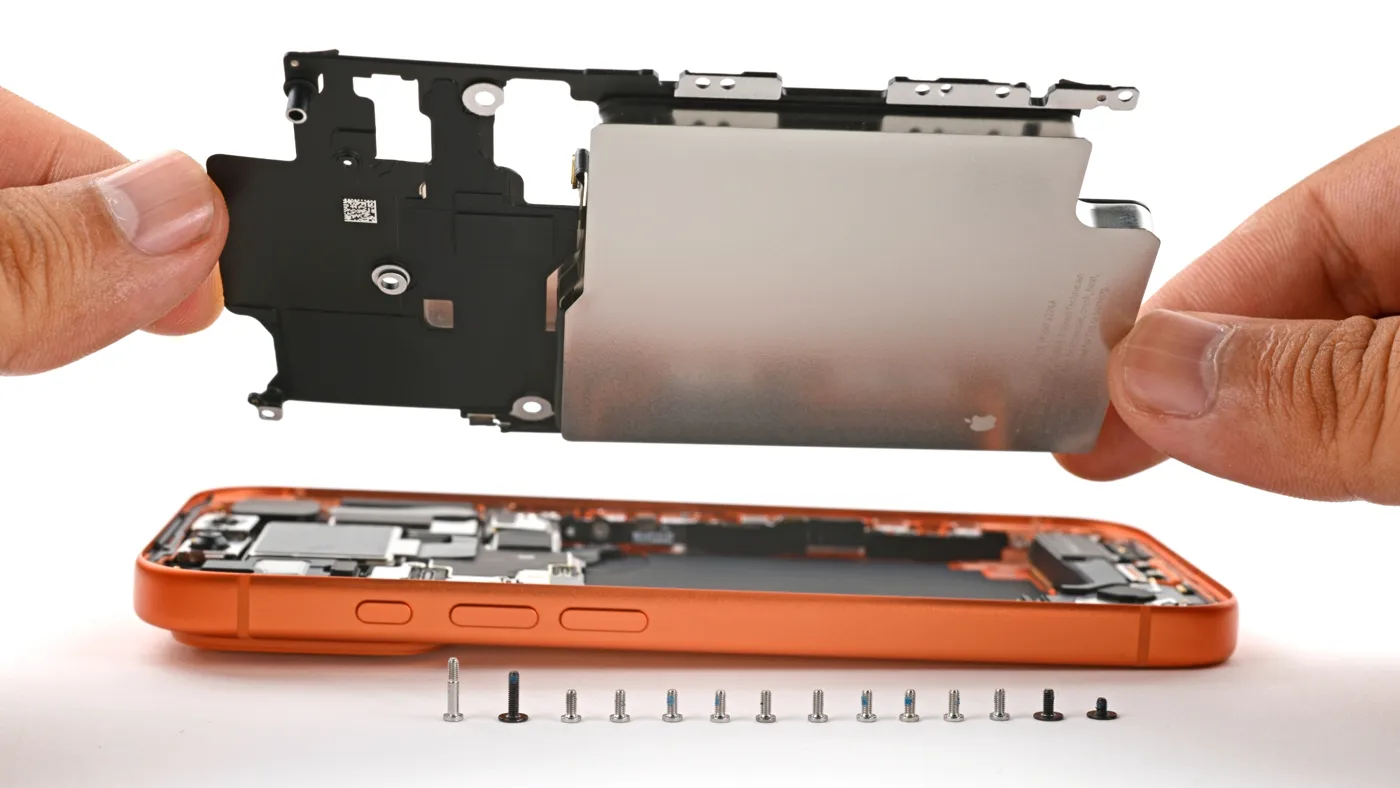
In its iPhone 17 Pro teardown, iFixit calls it an iPhone first: a screwed-in battery. The battery is still bonded to its tray with an adhesive that releases electrically, so there is no prying on the battery itself.
What needs more care
The same teardown flags several points for part replacement:
- Display flex cables. They are wider and more fragile than on the iPhone 16 Pro, and the touch IC has moved.
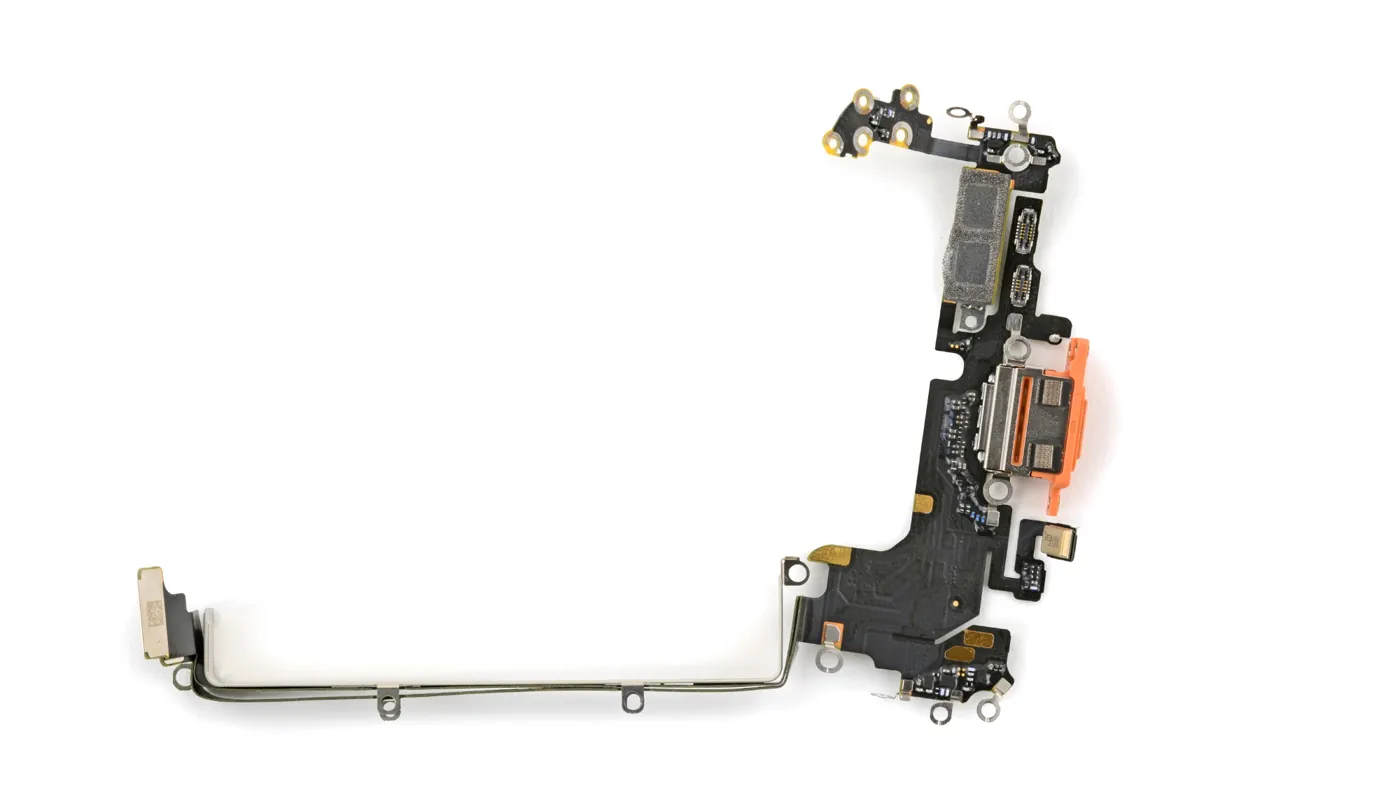
- Charge port. Its flex is larger and carries an extension. REWA calls it tricky to replace and notes that a failure may disable SIM card detection.
- Rear cameras. The modules are larger and their cables shorter, so they tear more easily.
- Face ID. The front sensors are larger and two elements swapped positions. REWA reports that Face ID repair by front camera replacement is still possible.
These are the repairs our Level 2 class teaches: battery, screen and charge port replacement.
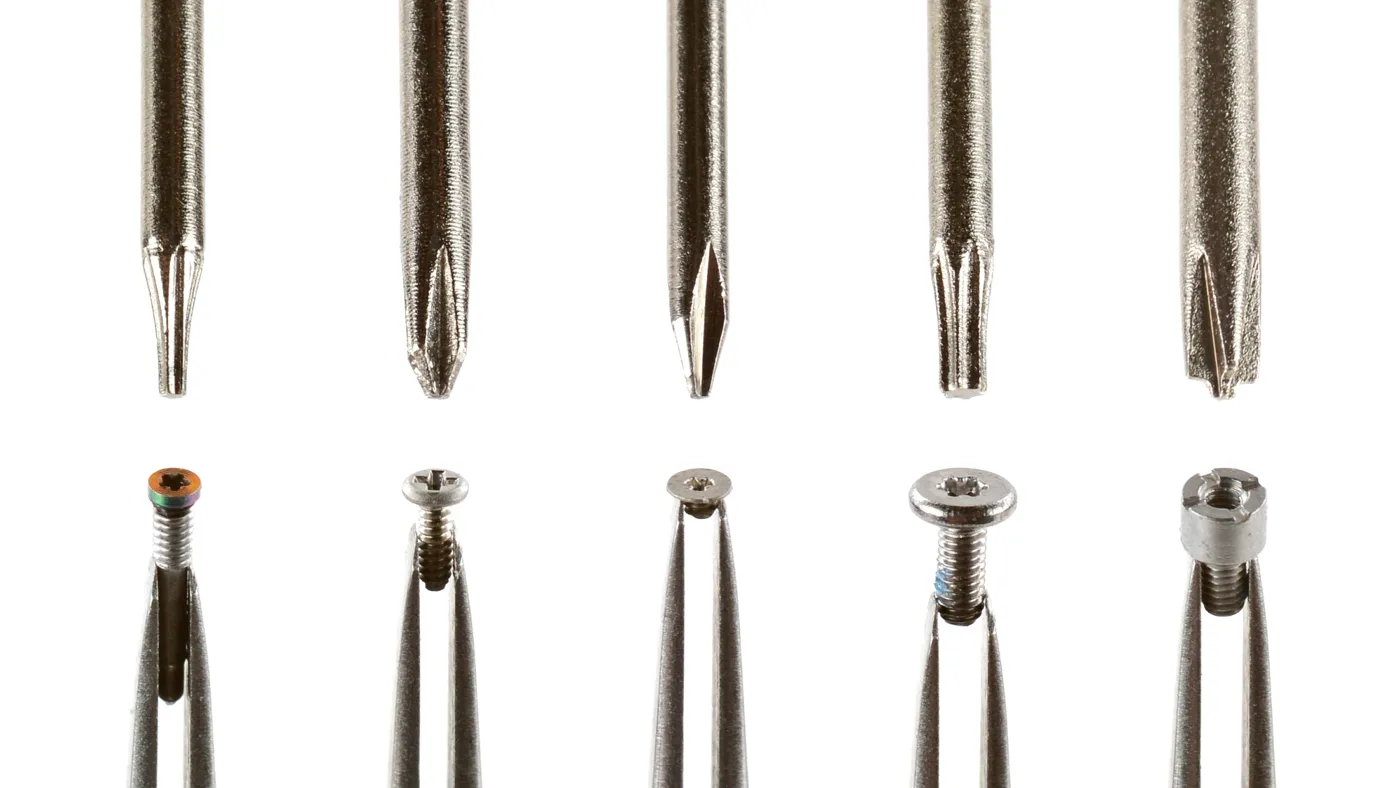
iFixit adds two practical findings. The phone uses five different screw drive types, so you need as many bits on hand. And replacing the USB-C port means removing dozens of screws.
Logic board: smaller, denser, riskier
This is the part that matters most for board-level work. According to REWA:
- the logic board sits horizontally, in the middle of the frame;
- it is much smaller than the previous one, with two additional flex connectors;
- the NAND overlaps the A19 Pro chip by about one third, which raises the risk of damage during storage work.
Their conclusion: advanced logic board repairs, such as chip rework, become significantly riskier. The vapor chamber cooling system also contributes to tighter component packing.
More screws for the screen and battery, more density on the logic board: the iPhone 17 Pro widens the gap between part replacement and component-level repair.
What it means for a repair shop
Part replacement stays within reach, provided you know what changed on each model. Board-level repair asks for more method as boards get denser: reading schematics, diagnosing, then removing and refitting components that sit closer together. That is what our micro-soldering and board repair program covers, and why we wrote Is microsoldering worth learning?
On parts pairing, iFixit reports that Apple's Repair Assistant calibrated new Apple parts without issue; parts from other manufacturers were not tested.
For part replacement procedures, Apple publishes an iPhone 17 Pro repair manual.
Sources: iPhone 17 Pro teardown by iFixit (photos and findings, September 2025) and iPhone 17 Pro teardown by REWA (findings). We had not reproduced these teardowns in our own workshops at the time of writing.