100% hands-on workshop
General micro-soldering course
Learn to repair all types of electronic boards: smartphones, tablets, game consoles and laptops. Become autonomous and versatile at an equipped workstation, under the binocular microscope.
What you will be able to do
Four skills, from diagnosis to repair.
Identify
Recognise the components of an electronic board and judge whether it has a history: already worked on, exceptional heating, oxidation, bending, physical damage, carbonisation.
Solder with dexterity
Use the tools of electronic board repair correctly and safely and practise manual soft soldering.
Replace components
SMD under 0.5 mm, connectors, small and medium BGA (20x20 mm), jumper wire repair, reballing of a two-part motherboard.
Repair all devices
Smartphones, tablets, game consoles and laptops: the same methods, adapted to each board.
After the course
What the job of a repair technician involves.
- Identify the components of an electronic board
- Judge whether a board has a history (oxidation, overheating, bending, carbonisation)
- Remove and replace SMD components on smartphones, tablets, consoles and computers
- Replace FPC, charging, USB-C and Micro-USB connectors
- Remove and replace BGA, including epoxy-glued and medium-sized ones
- Carry out jumper wire repair, down to 0.009 mm, including under a BGA
- Replace large connectors: HDMI, USB, jack
The course
A week of micro-soldering to repair most electronic boards.
This general micro-soldering workshop is entirely practice-oriented: the programme does not include diagnostic theory, only the practical and technical aspects of the electronic board repair trade. The aim is to let you tackle most electronic boards and replace most components.
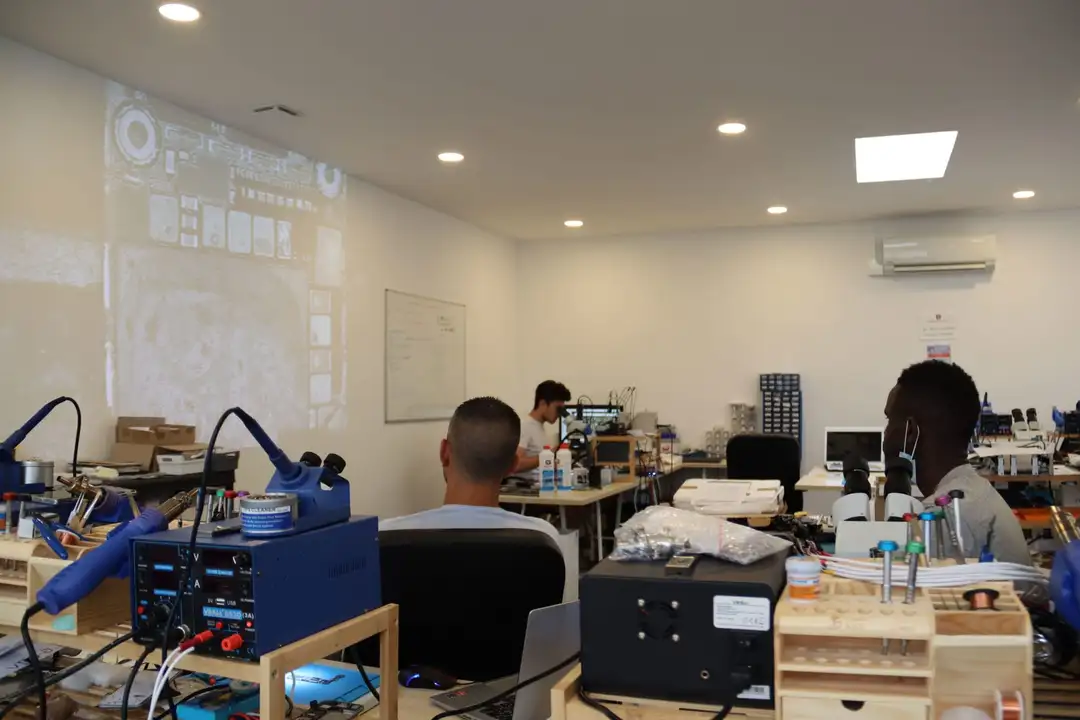
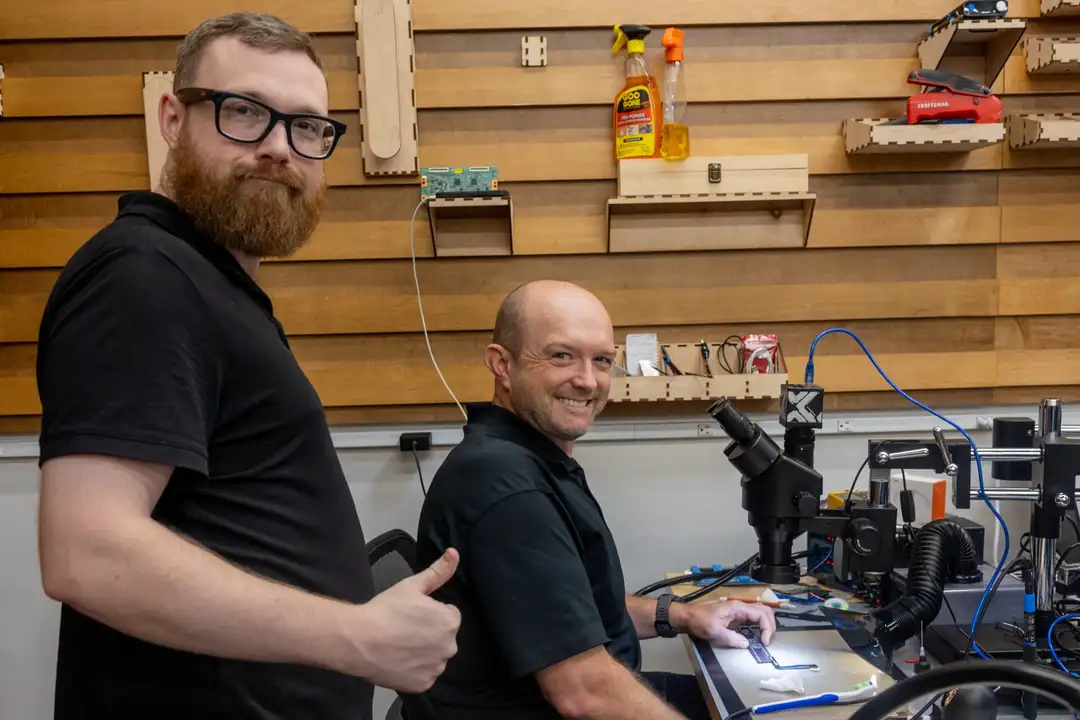
You work under the microscope on a variety of devices: iPhone (except sandwich motherboards), Samsung or Huawei Android smartphones, Apple iPad and Android tablets, handheld consoles such as the Nintendo Switch and home consoles such as the PS4, Acer, Asus, Toshiba laptops and MacBook. Each day is devoted to one technique: replacing SMD components, FPC, USB-C and Micro-USB connectors, BGA chips including those glued with epoxy, jumper wire repair down to 0.009 mm and replacing large HDMI, USB or jack connectors.
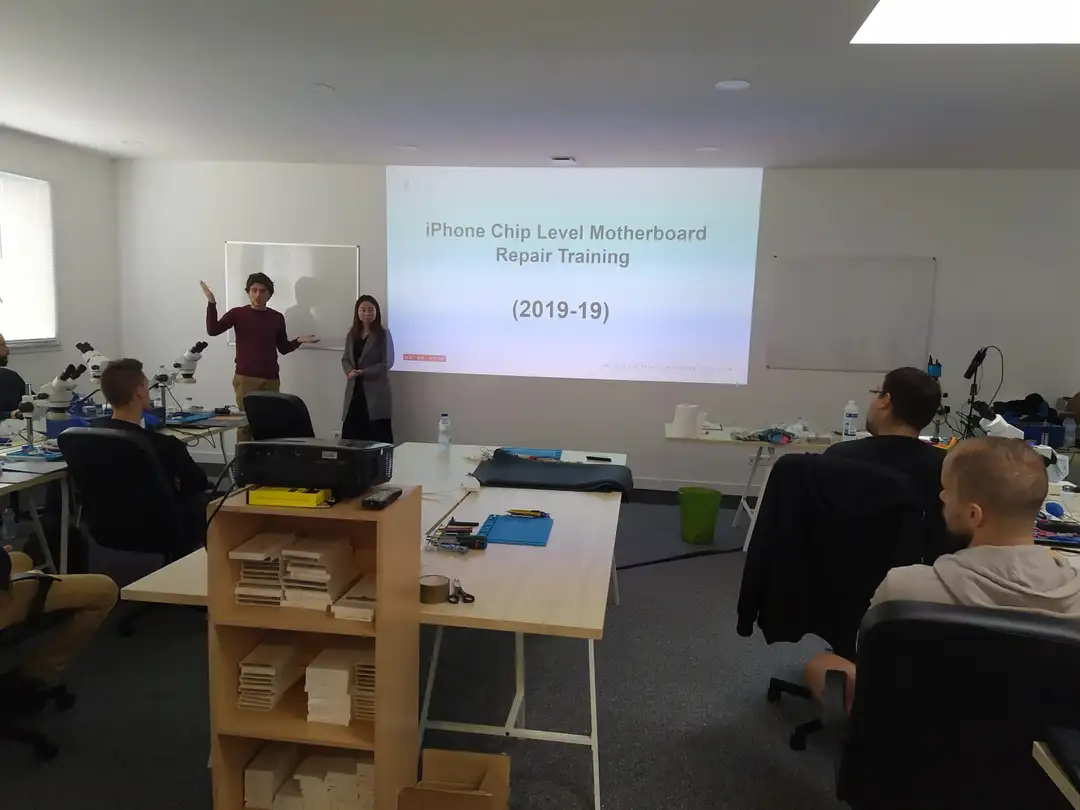
Each morning starts with a recap of the day before, then demonstrations under the microscope and hands-on practice supervised by the instructors (at least one instructor for six trainees). The course requires no prior micro-soldering experience: you just need the will to discover this field and to be physically able to use a microscope and both hands.
Programme
How the week runs.
Programme last updated: November 2026.
Day 1Printed circuit boards, cleaning, soft soldering tools and SMD replacement.
Morning
- Round table and introductions of trainees and instructors
- Introduction to the programme and overall assessment of participants’ level
- Architecture of a printed circuit board and types of components
- Safety instructions for working on a printed circuit board and cleaning method
Afternoon
- Presentation of the tools used in soft soldering
- Removal and replacement of SMD components on smartphones, tablets, consoles and computers
- Deepening towards smaller components (under 0.5 mm)
- Practice of the methods taught
Day 2Connector replacement: FPC, soldered charging, USB-C and Micro-USB.
Morning
- Recap of the day before
- Replacement of an FPC connector on smartphones, tablets, consoles and computers
- Replacement of an iPad-type soldered charging connector
Afternoon
- Recap of the practical work
- Replacement of a USB-C connector and a Micro-USB connector on smartphones, tablets, consoles and computers
- Practice of the methods taught
Day 3Removal and replacement of BGA (chips), including epoxy-glued ones.
Morning
- Recap of the day before
- Removal and replacement of BGA (chips) on smartphones, tablets, consoles and computers
Afternoon
- Removal of epoxy-glued BGA
- Removal and replacement of medium-sized BGA (20x20 mm)
- Practice of the methods taught
Day 4Jumper wire repair, from 0.10 mm to micrometric 0.009 mm, and under BGA.
Morning
- Recap of the day before
- Jumper wire repair (0.10 mm) on smartphones, tablets, consoles and computers
- Jumper wire repair under BGA
Afternoon
- Recap of the practical work
- Micrometric jumper wire repair (0.009 mm)
- Deepening of jumper wire repair methods and practice
Day 5Large connectors with high heat dissipation, assessment and end-of-course ceremony.
Morning
- Recap of the day before
- Replacement of large connectors on circuits with high heat dissipation: HDMI, USB, jack, notably on consoles and computers
Afternoon
- Recap of the week’s practical work and deepening of the methods
- Assessment of practical skills
- End-of-course ceremony
- Trainee interviews and farewell drink
Assessment
How your skills are assessed.
- Before registration: the “Which course is right for me?” questionnaire, completed alone or with an adviser, to analyse your needs and guide you
- Before the course: a placement questionnaire sent 6 days ahead (or completed on the first morning), to assess your existing knowledge and expectations
- During the course: continuous assessment by the instructors, who adapt some elements to the level of the group
- Last day: the instructor assesses whether each objective of the course has been reached
- Afterwards: attendance certificate; for funding, a certificate of completion, a paid invoice and a copy of the attendance sheet
Schedule
Upcoming sessions.
Pick a date: the registration form fills itself in. Scheduled sessions in Toulouse and Paris are taught in French; English-language sessions are coming. Dates may change.
Practical information
Audience, duration, price and accessibility.
Audience and prerequisites
- Who it is forAnyone who wants to train in electronic circuit repair
- PrerequisitesA wish to discover a new field of repair
- AlsoBeing able to use a microscope and both hands
Duration and organisation
- Duration35 h over 5 days, 7 h a day
- Hours9:00-12:00 and 13:00-17:00
- Group size12 trainees maximum
- SupervisionAt least 1 instructor for 6
- Content100% hands-on, no diagnostic theory
Price
- Price€1,950
- IncludedAll training equipment
- Funding may be possible depending on your status (see below)
What to bring
- ComputerLaptop running Windows 10
- BoardsAs many broken boards as possible (5 motherboards minimum) and screwdrivers
- ProvidedHot air station, multimeter, soldering iron, binocular microscope
Accessibility
- Reduced mobilityPlease tell us one month ahead
- Other needsContact us as early as possible
- Disability officerDorian Canit
- Training officerAlexandre Isaac
Location and next steps
- Toulouse2 rue Paul Verlaine, 31200
- TravelGuide with recommended hotels
- AfterwardsAlumni forum, team available by appointment
Funding
- French public funding (CPF, OPCO, France Travail) is only available to residents of France.
- Your employer or your national training scheme may cover the cost: ask us for the documents you need (quote, programme, attendance certificate).
- Payment in several instalments may be possible: ask us.
FAQ
Your questions.
Our scheduled sessions in Toulouse and Paris are taught in French. English-language sessions are being scheduled: register your interest and we will tell you the dates as soon as they are set. If you are comfortable with French, you can join any scheduled session.
No: the programme does not include diagnostic theory, only the practical and technical aspects. If you want to learn to diagnose from schematics and repair smartphone motherboards, choose the smartphone board repair and micro-soldering course.
iPhones (except sandwich motherboards), Android smartphones such as Samsung or Huawei, iPads and Android tablets, handheld consoles such as the Nintendo Switch, home consoles such as the PS4, Acer, Asus, Toshiba laptops and MacBook. The aim is to tackle most electronic boards and replace their components.
No. You need the will to discover a new field of repair and to be physically able to use a microscope and both hands. A phone interview with the course manager validates your project before registration.
Replacement of SMD components (down to under 0.5 mm), FPC, USB-C, Micro-USB and charging connectors, BGA (including epoxy-glued and medium-sized 20x20 mm), jumper wire repair from 0.10 mm to 0.009 mm, repair under BGA and replacement of large HDMI, USB or jack connectors.
The general course is a 100% hands-on 35 h workshop, with no diagnostic theory, on all types of electronic boards. The smartphone board repair and micro-soldering course also teaches you to diagnose from schematics and to repair smartphone motherboards.
A laptop running Windows 10, as many broken electronic boards as possible (at least 5 motherboards, whatever their condition or model) and screwdrivers. All training equipment is provided, and you can come with your own equipment.
The instructors assess you continuously, with an assessment of practical skills on the last day, before the end-of-course ceremony. You receive an attendance certificate, and if you have requested funding, the certificate of completion, the paid invoice and the attendance sheet.
The workshop is limited to 12 trainees, with at least one instructor for every six trainees, under the binocular microscope.
In a workshop in Toulouse (2 rue Paul Verlaine, 31200), Monday to Friday from 9:00 to 12:00 and from 13:00 to 17:00. You receive a travel guide with recommended hotels.
French public funding is only available to residents of France. Your employer or your national training scheme may cover the cost, and payment in several instalments may be possible. Contact us to look at your situation.
Book your seat.
Register in a few minutes. An instructor calls you back within 24 h to check your project.